 Compatible with Intelligent Octopus Go.



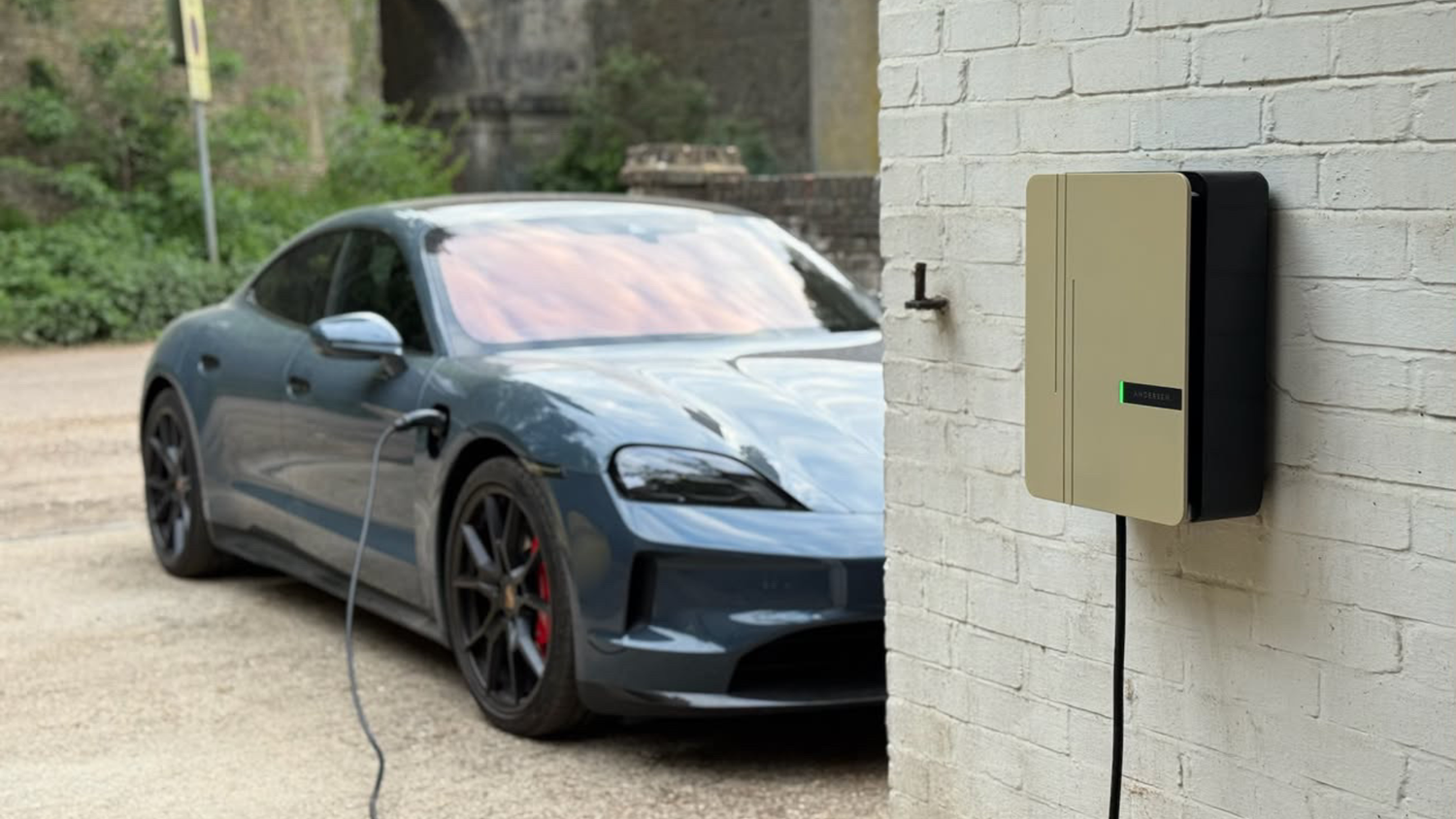
VAT is being removed from household electricity from October, reducing home EV charging costs and making it even more appealing to switch to electric vehicles.\
The financial case for switching to an electric vehicle is about to become even stronger.
From 1st October 2026, VAT on domestic electricity will be reduced from 5% to 0%. The change will apply across England, Scotland and Wales, including to households on fixed tariffs, with equivalent support planned for Northern Ireland. The Government estimates it will take approximately £45 off the yearly Ofgem price cap.
For every household, that means welcome relief from energy costs. For electric vehicle drivers, however, it will also reduce the cost of keeping their car on the road.
Lower household bills and lower driving costs
Unlike petrol or diesel drivers, EV owners who charge at home can power their car using the same electricity supply as the rest of their household. Reducing the tax applied to that electricity therefore lowers both domestic energy bills and vehicle running costs.
For an average EV driver charging at home at standard domestic electricity rates, removing VAT would be equivalent to an annual saving of approximately £20–£25 on charging alone. For higher-mileage drivers, that could rise to around £35–£40.
As the measure is initially confirmed from October 2026 until the end of March 2027, the amount saved during this first six-month period will depend on how many miles someone drives and how much charging they complete at home.
The saving may appear modest in isolation, but it strengthens an already substantial financial advantage.
David Martell, CEO of Andersen EV, said:
“Removing VAT from household electricity from October would be a welcome, practical measure that benefits millions of households, while strengthening one of the biggest financial advantages of owning an electric vehicle.
“The low cost of charging at home – made more compelling by smart tariffs – is already one of the strongest reasons for making the switch to electrified mobility. Many EV drivers are charging overnight for a fraction of the cost of filling up a petrol or diesel car. Reducing household electricity costs only strengthens that advantage and will give more consumers greater confidence to make the change.”
How much cheaper is an EV to run?
The cost of driving an EV depends on the efficiency of the vehicle and where and when it is charged. However, the difference between home charging and filling a petrol or diesel car can be considerable.
Based on an EV achieving four miles per kilowatt-hour, the current average capped electricity rate of 26.11p per kWh equates to approximately 6.5p per mile. Charging on a smart overnight tariff at around 7p per kWh can reduce that to less than 2p per mile.
By comparison, a petrol car achieving 45mpg with fuel costing £1.50 per litre would cost approximately 15p per mile.
For someone driving 10,000 miles per year, that could look like this:
| Charging or fuelling method | Illustrative annual energy cost |
|---|---|
| EV charged on a smart overnight tariff | Around £175 |
| EV charged at a standard domestic rate | Around £650 |
| Petrol car achieving 45mpg | Around £1,515 |
These figures are illustrative and will vary according to the vehicle, tariff, fuel price and driving style. They nevertheless demonstrate why home charging is central to the financial case for owning an EV.
Removing VAT will reduce those home-charging costs further. The change applies specifically to domestic electricity, making access to a home charge point and the right energy tariff increasingly valuable for anyone considering an electric car.
Almost one in three new cars is now fully electric
The announcement follows another important milestone for the UK’s transition to electric vehicles.
According to the Society of Motor Manufacturers and Traders, 63,950 fully electric cars were registered in June 2026. Battery-electric vehicles accounted for 30% of the new-car market – almost one in every three registrations – while volumes increased by 35% compared with June 2025.
Across the first half of 2026, more than 284,000 fully electric cars were registered, giving them a record 25% share of the market. Petrol registrations, meanwhile, declined by 4% in June and diesel registrations fell by more than 24%.
Electric vehicles are no longer a niche alternative. They are rapidly becoming a mainstream choice for UK motorists.
Giving drivers greater confidence to switch
Lower running costs are only one part of the decision to go electric. Consumers also want confidence in charging infrastructure, vehicle range, technology and long-term government policy.



Leave a comment
This site is protected by hCaptcha and the hCaptcha Privacy Policy and Terms of Service apply.